Princess Haiku is a literary collage of poetry, prose, photography, classical music, dance and book reviews, written in the tradition of a poetic memoir.
Showing posts with label compassion love. Show all posts
Showing posts with label compassion love. Show all posts
My local library had a brown BAG sale and I scored two bags of pre-read books for $4. I packed in 67 books both paperbacks and hardcovers. The books include poetry, fiction, light reading and even a few first edition paperbacks. Yes, Bibliophile heaven. It wasn't easy to lug the bags to my car as book collecting is a heavy affair. I have run out of shelf space despite a recent book purge and I am only keeping the best. If I plan to recycle a book and you want it- let me know.
I have decided to write a series of book reviews based on my new finds called, The Brown Bag Reviews
The debut Brown Bag Review goes to DIVA by Delacorta.
Divais a small mystery novel written by French writer, Delacorte in 1979 and is to literature what a tone poem is to music. Delacort describes his mystery novels as fairy tales for adults and Diva is a cool, stylish, new wave mixture of surrealism and potboiler. Diva is part of a series of stories in which Alba and Gorodish are the main characters. Publishers Weekly described the mystery, "A lean Parisian thriller featuring an unlikely pair of con artists: Serge Gorodish, a failed classical pianist who now specializes in complex crimes and his partner and protege, a 13-year-old kleptomaniac named Alba... suspenseful, offbeat."
If the book is charming, the film is visually stunning with excellent music. "Amongst the interesting elements of the soundtrack are the aria Ebben? Ne andrò lontana from Alfredo Catalani's opera, La Wally, and a pastiche of Satie's Gnossiennes composed by Vladimir Cosma." Diva, has become a cult classic and both book and film are that rare combination of equal twins. There are several good reviews online and the book is available on Amazon.
"A Thrilling Visual Poem, Jun 5 2004 Reviewer: Kim Anehall "www.cinematica.org"
Diva is poetically visual as it displays a cinematically stunning experience, which renders one speechless with its sublime cinematography...
I saw a deeply moving film on DVD, "Water," by gifted filmmaker Deepa Mehta. This luminous, and provocative portrayal of the plight of India's widows, is set in the 1930's against Ghandi's rise to power. Extremist groups in India "waged a campaign of death threats and riots to stop the production of this controversial film." Water is the story of Chuyia, an Indian girl married and widowed at the age of eight and sent afterwards to an ashram where Hindu widows must live in penitence. Its gorgeous music was composed by Mychael Danna. Water, is a film that speaks directly to the heart and to purity.
The power and beauty of spiritual traditions must somehow be preserved as human create more equitable social orders. The struggle between conscience and faith is universal and belongs to all of us. This theme is underscored in this film and it will be recognized in the future as a classic. The film's poeticism is reminiscent of Sajit-Rei.
The English National Ballet Company will be performing Swan Lake Ballet at Versailles this summer. Although I love modern dance the archetypes in classical dance have an undiluted power. Perhaps that is why people return to them generation after generation.
I found a discussion of the possible origin of the Swan Lake myth at
The swan was a symbol of death in some cultures, and the song of the dying swan was understood as joy at the prospect of entering realms of paradise. I see the swan as a shape shifter, a mirror reflecting a composite anima or animus within. -Or perhaps the dichotomy of the dark and light elements of the human spirit. I also see it as representative of the split in Western culture of sexuality (dark) and innocence "light."
I love mythology and folklore and wish I had found the time to take some classes in it at college. I almost made it to a "Marie de France" class but some required thing won out. My advice to everyone is to follow your heart and study what you love.
I'm interested in your interpretation of your Swan Lake?
flash your intuition here........
Special thanks to the surlalune folks for giving us all such a wonderful resource.
the Swan totem is associated with love, inspiration, intuition, self-transformation, gracefulness and beauty, and also with traveling to the Otherworld. As a water bird, it is also connected with emotions. Swan can help you with seeing the inner beauty in yourself and others, developing your intuition, accepting transformations and balancing your emotions.
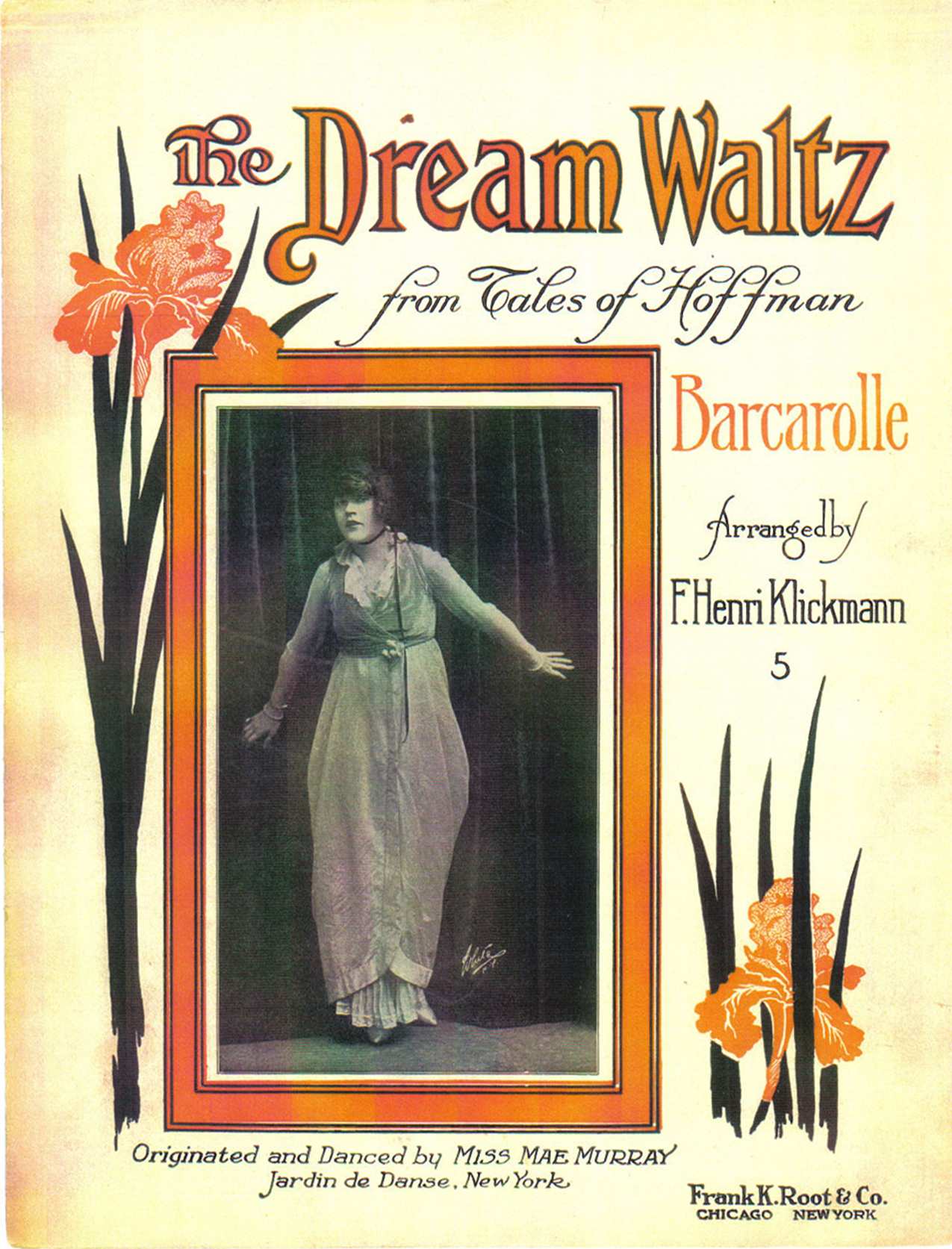
Tales of Hoffman "was released in 1951, at a time when the gritty realist school of cinema was dominant. The critics of the day were uncomprehending of the deliberate artificiality of what Powell called his "totally composed" film. The sheer beauty of the production, the brilliance of the cast and the glories of Offenbach's music as conducted by Sir Thomas Beecham largely went over their heads..."
The Children of Paradise is my favorite movie and its ultimate truth has eluded me. Like a deeply layered painting or pearl, one reaches one texture or color to discover another lies beneath. I return to the Children of Paradise, year after year like cycles of the Moon, drawing water and wisdom from a poetic well.
"What is the true nature of love," The Children of Paradise, asks? Does poetic mime, Baptiste Debureau have the answer? Or the elusive, beauty, Garance? Can actor-artist Federick Lemaitre articulate love most succinctly or are there glimmers of dark truth in the knife of philosopher-criminal Lacenaire? I have watched this film from the viewpoint of each of these characters and finally reached my own conclusion as to which character embodies love itself.
The Children of Paradise was shot during the years of occupied France, and Nazi seconds acted next to members of the French Resistance. That this film ever came to exist is a testament to the human spirit and the courage of filmmaker, Marcel Carne.
The poem that I mostly directly correlate with Children of Paradise is, "A Thing of Beauty," by John Keats.
A thing of beauty is a joy for ever: Its loveliness increases; it will never Pass into nothingness; but still will keep A bower quiet for us, and a sleep Full of sweet dreams, and health, and quiet breathing. Therefore, on every morrow, are we wreathing A flowery band to bind us to the earth, Spite of despondence, of the inhuman dearth Of noble natures, of the gloomy days, Of all the unhealthy and o'er-darkened ways Made for our searching: yes, in spite of all, Some shape of beauty moves away the pall From our dark spirits. Such the sun, the moon, Trees old, and young, sprouting a shady boon For simple sheep; and such are daffodils With the green world they live in; and clear rills That for themselves a cooling covert make 'Gainst the hot season; the mid-forest brake, Rich with a sprinkling of fair musk-rose blooms: And such too is the grandeur of the dooms We have imagined for the mighty dead; All lovely tales that we have heard or read: An endless fountain of immortal drink, Pouring unto us from the heaven's brink.
I found out that I'm intrigued by the concept of a moonlight garden, i was delighted to find this historic reference.
Mahtab Bagh is situated on the sandy bank of Yamuna River just opposite the Taj Mahal mausoleum. Located across the river from the Taj Mahal, the Mahtab Bagh (or Moonlight Garden) was a pleasure garden built by Shah Jahan in the 1600’s. From this vantage point, the emperor could relax and enjoy the vista of his great work in a setting of fountains and airy pavilions.
Plan of the Taj Mahal Complex including the Mahtab Bagh
The place is an ideal spot for it provides picturesque view of Taj Mahal. The name Mehtab Bagh means 'Moon Lit Garden' and the same was testified by the beautiful reflection of Taj Mahal in the pool at night in Mahtab Bagh. The place has a history of its own. It is believed that the great emperor Shah Jahan who built Taj Mahal for his queen wanted an identical one for himself at Mehtab Bagh (or was an extension of the Taj Mahal garden). However the archaeological findings have proved the existence of garden complex. The important attraction of Mehtab Bagh is Taj Mahal itself.
The garden has been renovated by the Archaeological Survey according to the original plan. The place has been enriched with vegetation and at present more than 40 species of plants bloom in the garden.
Satellite imaging and an old plan of the Taj complex indicate that Mahtab Bagh was an extension of the gardens across the river:
Elizabeth B Moynihan's book, draws on an archaeological investigation of a garden opposite the Taj Mahal, originally forming part of a single composition. via the book ‘The Moonlight Garden’ – New Discoveries at the Taj Mahal"
Memoirs of a Geisha is one of the most visually mesmerizing films that I have experienced. I highly recommend it despite the fact that the denouement falters and historical inaccuracies mar its perfection. It is enough to see this film for its glimpses into the secretive world of the Geisha. The film presents ravishing dance scenes including the famous, "Snow dance" choreographed by John deLucca and superb music. Below is a clip from YouTube and links to other video. The music was composed and conducted by John Williams; performers include Itzhak Perlman, Yo-Yo Ma and Pro Musica Nipponia ensemble. Read an interesting review via DVD Central.
This poet dreams of walking in a midnight garden, where poems are pearls draped upon bushes and hanging from exotic trees. -Where dreams are Faeries' Fire and pears belong to the fruit of all possibility.
Lily is a ninety-one year old Asian American calligrapher. She will retire in April and will be donating her life's work to a local university. I met her two weeks ago at an art exhibit where she was displaying several of her water color scrolls. Our spirits touched and Lily invited me to visit a class she has been teaching for twenty-five years. Lily asked me what my favorite flower was. Chrysanthemum, I replied and she painted me three gold chrysanthemums and a dragonfly. I watched intently as Lily painted the flowers and her brush strokes were so perfect it was as though they were choreographed. She told me that she began to learn calligraphy and brush painting when she was eleven years old and living in occupied territory. "There was so much pain after the war," she said. "One needed to find a way to escape; to endure it and I found solace in water color painting. - This is what people do- art, painting, music, dance. This is called culture." I understood Lily, for this is what my writing and music does for me; makes difficult days possible and inspires me to transcend barriers and limitations of my life.
Diane Dehler is a photographer and poet. Her flower photography has been featured on Haiga online and she has several thousand followers on facebook. Her multi-media video poem, "The Lotus" has received 3000+ views on youtube. As a poet she is known for her lyricism and has been nominated for the Pushcart Prize and was a finalist for the Anna Davidson Rosenberg Poetry Prizes 2016. She received a degree from the Creative Writing Program at San Francisco State University, receiving the Outstanding Student of the Year Award. She is an English Language poet in the international literary scene and; has been published in numerous poetry journals and three anthologies. Mostly recently she has published in, The Artemis Review, Cultural Weekly, Edgar Allan Poet, The Mas Tequila Review, The Criterion: An International Journal in English, Munyori Literary Review, The Taj Mahal Review, Truck, Deepwater Literary Journal, Moonbathing: A Journal of Women’s Tanka, Lummox Journal and poeticdiversity.


 Posts
Posts