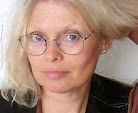
Alajandre Pizarnik
was born on April 29,1936 to Russian Jewish immigrant parents in Avellaneda, a suburb of Buenos Aires, Argentina. A year after entering the department of Philosophy and Letters at the Universidad de Buenos Aires, Pizarnik published her first book of poetry, La tierra más ajena (1955). Soon after, she studied painting with Juan Batlle Planas. Pizarnik followed her debut work with two more volumes of poems, La última inocencia (1956) and Las aventuras perdidas (1958).
From 1960 to 1964 Pizarnik lived in Paris. There she worked for the journal Cuadernos, sat on the editorial board of the magazine Les Lettres Nouvelles, and participated in the Parisian literary world. Pizarnik also attended a variety of courses at the Sorbonne, including contemporary French Literature. She died in Buenos Aires of a self-induced overdose of the prescription drug; seconal.
more
Pizarnik is in many senses, the Argentine equivalent of the American poet, Sylvia Plath, who also tragically ended her life by suicide.
During her short life, Alejandra published eight small books that have earned her a fundamental place in poetry in Spanish. Her forerunners were the Arab-Andalusian poets of the Middle Ages, as well as Quevedo, San Juan de la Cruz and Sor Juana; to these she later added her readings of Rimbaud, Yves Bonnefoy and the French surrealists. Eventually, her poetic vocabulary became unique: echoes of the Spanish of the Golden Age and of the laborious games of twentieth-century French poetry can be heard in the background of her writing, but they are never allowed a full presence.
Alejandra’s style is too ascetic, too demanding for any such intrusions and the words she chooses to allow onto the page must undergo frightful ordeals of expurgation. As in fairy-tales, only a handful of those who survive the terrible tests are allowed in the end to live happily ever after. In her diary, on 30 October 1962, after quoting from Don Quixote,(“...but what pleased Don Quixote most was the marvellous silence that reigned in the whole house...”) she wrote: “Mustn’t forget to commit suicide.”
ASHES
The night splintered into stars
watching me dazzled
the air hurls hate
its face embellished with music.
We will go soon
Secret dream
ancestor of my smile
the world is emaciated
and there is a lock but no keys
and there is terror but not tears.
What will I do with myself?
Because to You I owe what I am
But I have no tomorrow
Because to You I...
The night suffers.
Here is an excerpt of her writings.
Alejandra Pizarnik's Poetics
"Ojalá pudiera vivir solamente en éxtasis, hacienda el cuerpo del poema con mi cuerpo, rescatando cada frase con mis días y con mis semanas, infundiéndole al poema mi soplo a medida que cada letra de cada palabra haya sido sacrificada en las ceremonias del vivir."
If only I were able to live solely in ecstasy, making the body of the poem with my body, redeeming each phrase with my days and weeks, infusing the poem with my breath for each word that has been sacrificed in the ceremonies of living.
"La poesía es el lugar donde todo sucede. A semejanza del amor, del humor, del suicidio y de todo acto profundamente subversivo, la poesía se desentiende de lo que no es su libertad o su verdad. Decir libertad o verdad y referir estas palabras al mundo en que vivimos o no vivimos es decir una mentira. No lo es cuando se las atribuye a la poesía: lugar donde todo es posible."
Poetry is the place where everything happens. Similar to love, humor, suicide and every profoundly subversive act, poetry is not interested in that which is not its freedom or truth. To say freedom or truth and refer these words to the world we live in or do not live in is to tell a lie. It isn't when they are attributed to poetry: the place where all is possible.
And this excerpt from my favorite poem of Pizarnik.
From Arbol de Diana
6
she undresses in the paradise
of her memory
she does not know the ferocious destiny
of her visions
she is scared of not knowing how to name
what does not exist.
36
in the cage of the time
the slept one watches with her single eyes
the wind brings her
the tenuous answer of the leaves
In conclusion it must be said that poetry is an often haunted and dangerous vocation. -One that strips self from self and may leave a vampire feasting upon its own marrow; a suicide in sunlight.


 Posts
Posts